
 Too often we work in self-segregated and uncoordinated isolation in efforts to conserve and protect natural lands and wildlife habitats, rivers and estuaries, public parks and reserved community green places. Failure to coordinate efforts through cooperative alliances diminishes our ability to be effective in aim to protect and conserve more land and water resources.
North Carolina’s environmental protection and land conservation organizations—motivated by the state’s 20-year-old grants program that provides funding for combined land and water conservation projects—have worked together more closely than in many other states, and may serve as an example of how to build partnerships across the South. Until recently,when the North Carolina state legislature and governor drastically reduced funding and combined several of the Clean Water and other environmental trust fund programs, state funding for environmental trust funds in some years exceeded the $100 million annual goal. With the added benefit of privately contributed funds, federal government matching grants, and landowners’ frequent willingness to sell land or easements for conservation at substantially less than appraised value, the leveraging effect of these public funds produced magnificent accomplishments. . . .
1 Comment
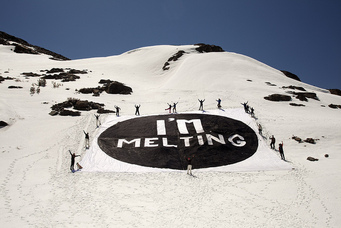 From 350.org/David Gilbert As much progress as we have made to safeguard our natural heritage and defend our environmental resources, our present situation seems grim and the future is uncertain, particularly with the twin perils facing us in the domestic political arena and the dramatic consequences of world climate change. I am reminded of the fact that, despite our many gains, our situation is not all that different from what U.S. President Franklin D. Roosevelt observed more than 75 years ago when he dedicated the new Great Smoky Mountains National Park in an address at Newfound Gap, on the North Carolina – Tennessee border, on September 2, 1940: We used up or destroyed much of our natural heritage just because that heritage was so bountiful. . . . We slashed our forests, we used our soils, we encouraged floods . . . all of this so greatly that we were brought rather suddenly to face the fact that unless we gave thought to the lives of our children and grandchildren, they would no longer be able to live and to improve upon our American way of life. In 1940 President Roosevelt and the country were preparing for entry into World War II. Even while preparing for war, FDR’s favorite slogan was, “Conservation is a basis for permanent peace.” He was fundamentally concerned for America’s environmental “infrastructure” and future security and well-being.
Now worldwide climate change--largely human caused--is threatening us. Elsewhere on our ConservationSouth website, you will find links to numerous resources that may help in the effort to respond and adapt to climate change. For further inspiration, we direct you to Bill McKibben's August 2016 article in the New Republic, “A World at War.” McKibben, Schumann Distinguished Scholar at Middlebury College and co-founder of the climate group 350.org, has issued an important call to arms. --Chuck Roe, SCP President  Photo by Laura Cotterman Photo by Laura Cotterman Years ago, during my interview for an adjunct professorship at the Ringling School of Art and Design in Sarasota, Florida, I argued successfully the need for the college to hire me as an ecologist to work with the institution’s distinguished arts educators and students.
They needed me, I asserted, to help provide a critical thinking approach to the natural world too often portrayed naively in the visual and performing arts. I am happy to report that, for years afterward, I taught a popular course at the school focused on biodiversity as our global treasure.  Photo by Laura Cotterman Photo by Laura Cotterman The South’s forests encompass a broad range of ecosystems and landscapes and are home to many rare, threatened, and endemic species of plants and animals. Forest ownership and uses in the South have been changing dramatically in the early 21st century, raising questions about the future of our southern forests. A huge transition in forestland ownership has been occurring, with the forest products industry divesting about three-fourths of its timberland holdings in the southern U.S. in the ten years between 1998 and 2008. What are the implications for forest management and sustainability? How will forest land ownership in the South continue to change in the future?
Private landowners hold 86 percent of the forested land in the southern U.S., with two-thirds of this area owned by families or individuals. The average size of family-owned forest holdings is small: only 29 acres (although 60% of family-owned forests exceed 100 acres in size). Two-thirds of these private landowners harvest and sell trees from their land. In recent history, much of the South’s forests were owned by big timber production industries. . . . Human impact on Earth is so profound and all pervasive that many conclude we have caused a new geological epoch called the Anthropocene or Human Age. We humans, with our world population approaching 9 billion people, have become a geologic change agent. Our technological effects, immense resource consumption, widespread pollution of land and water, vast landscape and climate impacts, and our sheer numbers and ubiquitous presence have altered the entire planet. There remain no parts of the Earth’s landscapes, no body of water, and no wildlife and natural places, that are untouched and unaffected by humankind. No place is so remote not to bear evidence of and impacts by humans. We could even say that nature is no longer “natural.”  There is a growing public awareness of these difficult truths, which are being reported more frequently by our media (though seldom with enough of a sense of urgency). The National Geographic Society for some years has been attempting to raise public awareness in its publications, documentary films, and online articles, including its November 2015 special issue on climate (“Cool It”), which explains that dramatic changes are happening now and will likely accelerate. Without drastic alteration in human practices and behaviors, things will likely get much worse for most of the world’s human and natural communities. One hopes a catastrophic, worldwide “Pearl Harbor” or more Katrinas and Fukushimas will not be needed to wake up humanity to the urgent necessity for an overhaul in our economies and behaviors. Earth is our only home, and for our lasting well-being we had better figure out how to achieve harmony with it. Does humankind have the ability and will to change/ameliorate our Earthwide, oceanic, and atmospheric impacts?
Challenges and Dilemmas in Protecting Natural and Cultural Environments in the Twenty-first Century12/10/2015
 Photo by Laura Cotterman Photo by Laura Cotterman We need a convergence of interests and efforts if we want to be successful in protecting land, water, wildlife, and historic and cultural resources. Every protected natural place also preserves an historic site, because no natural area is so remote or so wild as not to retain vestiges of human presence. In this Anthropocene era there are effectively no “natural areas” in the United States that lack signs of human culture—that are without human imprint. Understanding this fact (and learning to read the cultural history of a “natural” landscape) raises hope and opportunity for more effectively combining forces to conserve and protect areas possessing both natural and cultural resources and legacies. National Heritage Areas are relatively recent examples of collaborative recognition encompassing the conservation of natural and cultural resources.
In this time of profound and prolific human effects, special dilemmas and challenges arise as we work to preserve nature. There is debate over the value of protecting smaller scale natural areas versus focusing on broad landscapes. Nature is dynamic and the effects of human activities are so pervasive; no tract of land can be completely protected from human interference, history, and the flow of time. Land conservation programs must recognize and respond to the realities and challenges of influencing land use and guiding the conservation and protection of critically important environmental resources. Land conservationists, like historic preservationists, must move beyond the comparatively “safe” and non-confrontational strategies of simply buying key natural or historic places. We must make major advances and devise creative strategies to conserve whole landscapes with assets of natural and cultural importance—places held dear for both our natural and cultural heritage. Success in protecting the best of our natural and human environment can only be derived by fostering a sense of love and respect for the land. Out of a greater sense of love and respect for land as “home” will come greater public support for the work of land conservation and cultural resource protection. --by Chuck Roe, President, SCP Read more of Chuck’s perspective on this subject in his chapter “The Natural Environment,” published in the book A Richer Heritage: Preservation in the Twenty-First Century, Robert E. Stipe editor, University of North Carolina Press (2003). Download a PDF. In the chapter, Roe recounts the growth of concern about natural environments and increase in number of public and nongovernmental land conservation organizations in the U.S. since the late 1960s, the evolving methods employed by private land conservancies, private land conservation accomplishments over the thirty-year period and prospects for the future, the overlap of natural and cultural resource preservation efforts producing common ground of interests and opportunity, special dilemmas in preserving nature, and challenges for land conservation and nature preservation in the 21st century. |
When we see land as a community to which we belong, we may begin to use it with love and respect.... Conservation, viewed in its entirety, is the slow and laborious unfolding of a new relationship between people and land." There is in fact no distinction between the fate of the land and the fate of the people. When one is abused, the other suffers. From the PresidentSCP President Chuck Roe looked at land conservation along the route of John Muir's "Southern Trek." About ViewpointThis blog offers views of our Board and partners. We invite your viewpoint on the following questions: Archives
April 2024
Categories
All
|
 RSS Feed